🌳 Carmelita: A Century of Stewardship in Guatemala’s Forests
Community forest management (CFM) in Central America, where communities hold rights to manage forests —especially in Guatemala—is one of the most studied and widely cited models in the tropics. At the heart of this success story lies Cooperativa Carmelita, a community enterprise in the Petén region that exemplifies how long-term forest concessions can empower local populations to protect biodiversity while improving livelihoods.
🌱 A Legacy of Stewardship
Founded as a chicle camp, Carmelita evolved into a cooperative in 1998 and was granted a forestry concession by the Guatemalan government in 1994. This concession was renewed in 2020 for another 25 years, reaffirming the community’s role in managing 54,000 hectares of forest within the Maya Biosphere Reserve. They stand as a beacon of community-led forest management. With over 120 years of history, Carmelita began as a camp of rubber collectors and has evolved into one of the most successful community forest enterprises in Central America.
The cooperative’s mission is to sustainably manage natural resources while reinvesting in education, healthcare, and infrastructure for its 470 residents.
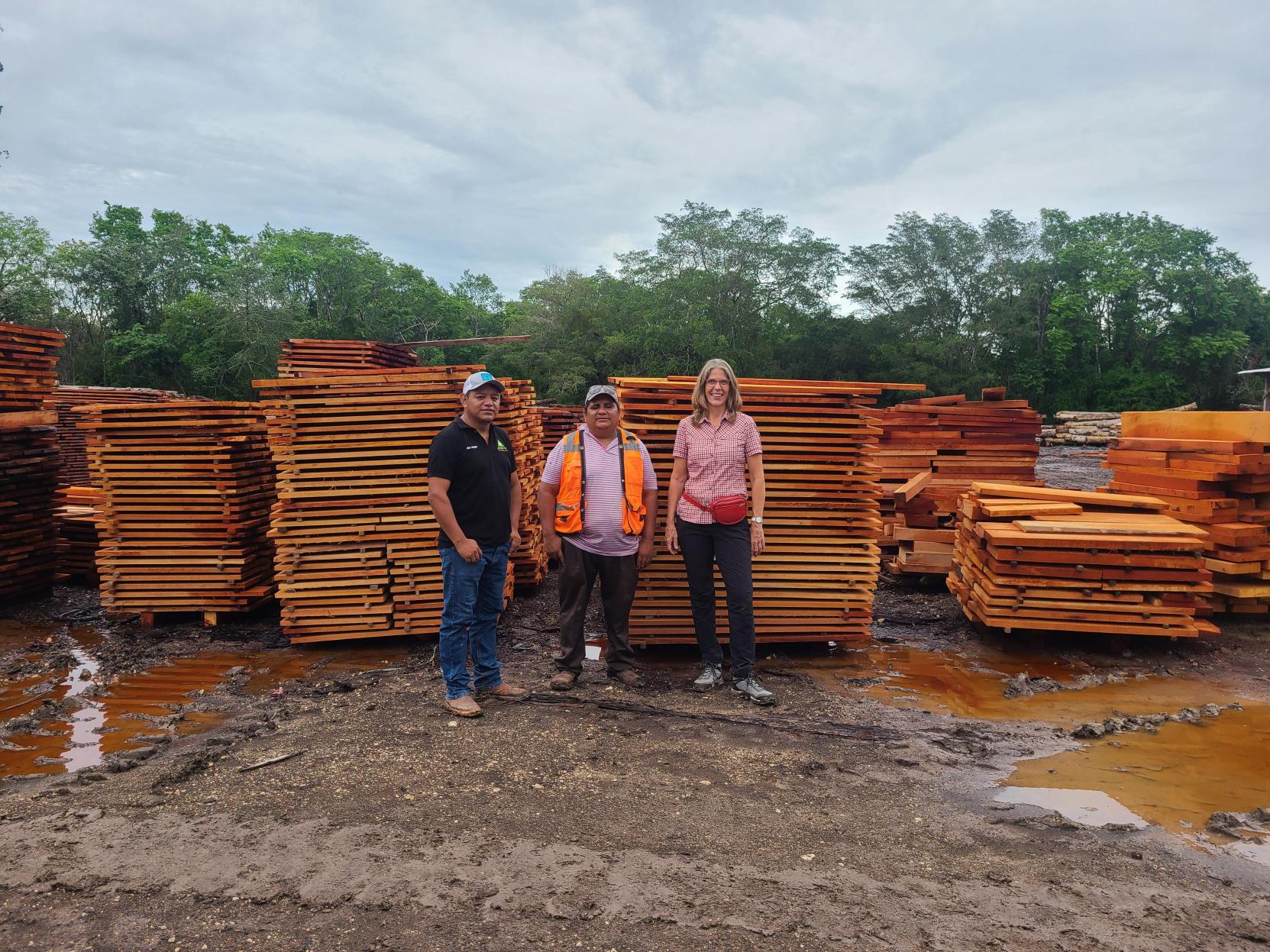
Forest management is a major source of employment and income for Carmelita’s residents, especially during the February–May harvesting season. The cooperative’s milling capacity allows it to offer high-value round and sawn wood to both local and international markets. Reinvestment in education, health, and infrastructure has made Carmelita a cornerstone of rural development
🔍 Why Community Forest Management Works
Guatemala’s CFM model is overseen by CONAP, the national protected areas authority. Communities like Carmelita harvest timber and non-timber products (xate palm, latex, ramón seeds and honey) as well as agroforestry and tourism activities under approved management plans. The concession contract includes the obligation to obtain a forestry certification three years after the concession is granted. Therefore, all concessions have Forest Stewardship Certification (FSC) certification, or in the case of new concessions, they are in the process of being certified. The FSC certification has served as a key guarantor that communities comply with the highest international environmental and social standards in their forest management. The results are striking: deforestation rates inside community concessions are almost 0 and significantly lower than in adjacent protected areas without community control. These community enterprises became major rural employers and reinvest is schools, health and infrastructure.
Tenure security is the cornerstone of this success. Where communities have clear, long-term rights, and in an enabling environment, receive the required technical and financial support they can manage forests sustainably. In addition, to be able to defend the rights granted, the communities have been organized under the Association of Forest Communities of Petén, and received technical and financial support to be able to develop and defend the Community Forest Management (CFM) model.
💰 Financing the Forest Economy
Despite their success, community forest enterprises face limited access to adequate credit. On the one hand, they are not always prepared to meet the requirements of financial institutions, and on the other hand the forestry sector is considered high-risk—especially when it involves communities.
FCCF seeks to fill a critical gap left by conventional banks, which often overlook or avoid financing community-based forestry initiatives due to perceived risks and rigid requirements. By designing financial instruments tailored to the realities of forest communities, FCCF demonstrates that inclusive and adaptive financing can unlock development potential while safeguarding forests and biodiversity.
Therefore, FCCF has supported Carmelita through a working capital credit line. In 2022, FCCF provided its first working capital loan to Carmelita, enabling a record harvest of 11,000m³ of roundwood.
The credit analysis was supported by Rainforest Alliance and Association of Forest Communities of Petén (ACOFOP), ensuring robust environmental and social safeguards
FCCF’s financing also promotes the use of lesser-known timber species, contributing to long-term sustainability and biodiversity conservation.
A second loan in 2025 allowed the cooperative to:
- Start harvesting earlier in the season.
- Rent out equipment for additional income.
- Process timber without pre-sale commitments, improving market leverage.
- Invest in ecotourism and other ventures
FCCF’s due diligence framework ensures that credit is disbursed based on milestones and monitored locally.
🌍 A Scalable Model
FCCF is now exploring how to replicate this model with other communities. The goal is to support entrepreneurial community forest enterprises that combine conservation with economic development.
⚠️ Challenges Ahead
While the model is robust, it faces threats of land invasion for changing land use from forestry to livestock farming, drug trafficking, and climate-related risks. Yet, having secured a 25-year extension of the forestry concessions, technical and financial support, and diversified business model position it as one of the most resilient and impactful community forest enterprises in the region.
